

A US private bank’s top client is a tech entrepreneur who splits his time between San Francisco, London, and Singapore. He has a nine-figure portfolio. His relationship manager is in New York. When markets moved sharply in Q4 last year, the client sent a message at 10 PM his time, which was 2 AM New York time, asking about rebalancing into private credit. His RM was asleep.
By morning, the client had already spoken to a competitor.
This is not an extreme case. It is the ordinary reality of serving ultra-high-net-worth clients in 2026. The UHNW population, defined as individuals with a net worth above USD 30 million, reached 510,810 globally as of mid-2025, with North America accounting for 41 percent of those individuals and USD 24 trillion in collective wealth, according to Altrata’s World Ultra Wealth Report 2025. These clients do not live inside business hours. They do not stay in one city. They do not wait.
The private banking model was built for a different era. One where the client came to the bank. Where the RM had a mahogany desk and a leather chair. Where relationships were built over lunches that lasted two hours. That era produced extraordinary client loyalty. But it also produced a model that breaks down the moment the client is on a different continent.
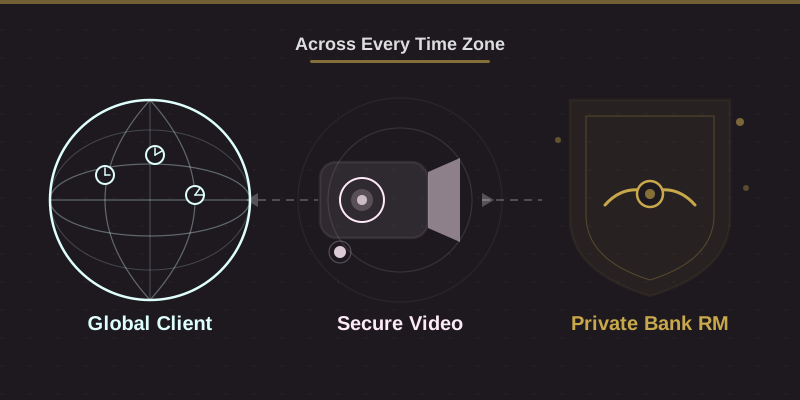
Secure video banking does not replace that relationship. It is the infrastructure that makes the relationship possible across every time zone the client happens to be in.
The Scale of the Challenge Facing US Private Banks in 2025
The numbers make the stakes clear.
The global UHNW population reached 510,810 individuals in mid-2025, controlling collective wealth of USD 59.8 trillion. North America leads with 41 percent of that population. By 2030, Altrata forecasts the global ultra-wealthy population will grow to 676,970 individuals, up 31 percent from mid-2025.
An estimated USD 83.5 trillion intergenerational wealth transfer is now fully underway, with approximately USD 62 trillion of that figure coming from HNW and UHNW households, representing just 2 percent of all families globally. This wealth transfer is not just about scale. It is about generational change in expectations. The next generation of UHNW clients did not grow up with a banker they met for lunch once a quarter. They grew up with instant, always-on, app-first experiences, and they expect the same from their private bank.
At the same time, the service model has not scaled with the growth. High-net-worth and ultra-high-net-worth clients now live in a digital-first world where expectations are shaped by mobile-first experiences and on-demand luxury. And yet the tools most private banks give their relationship managers are still largely built around physical presence.
The result is a gap that clients notice, especially during the moments that matter most: market volatility, major life events, cross-border asset moves, and estate planning decisions. In all of these moments, availability, clarity, and documentation are everything. Geography and time zones cannot be allowed to get in the way.
What Ultra-HNI Clients Actually Expect in 2026
Understanding what UHNW clients want in 2026 requires looking past the obvious answers.
Yes, they want excellent returns. Yes, they want access to private equity, alternative investments, and bespoke structured products. Alternatives currently comprise 17 percent of young UHNW investor portfolios, and 93 percent plan to increase their allocation in coming years, according to Bank of America Private Bank’s 2024 Study of Wealthy Americans.
But the differentiator, the thing that determines whether a client stays or leaves, is almost never the product range. It is the quality of the relationship. Specifically: how available, how transparent, and how personally engaged is the person managing their wealth?
The UHNW population is predicted to grow to 587,650 and control USD 68.2 trillion by 2028. Baby Boomers currently hold 44.5 percent of UHNW wealth, but by 2040, Gen X and next-gen clients will have replaced them, requiring private banking strategies that serve every generation, often multiple in the same household.
That generational complexity matters for video banking because the solution needs to work for a 68-year-old founder who still prefers a phone call and a 34-year-old heir who wants to review portfolio dashboards on a screen share from his apartment in Dubai. A well-designed video channel serves both.
The HNI client of 2026 expects institutional-grade products, a digital experience that matches consumer apps, and full transparency about what they are paying for and why. Private banks that cannot deliver all three simultaneously, through a single seamless channel, are going to lose clients to those that can.
How Secure Video Solves the Time Zone Problem Without Losing the Human Touch
The core tension in private banking is this: scale and availability require technology, but trust and depth require humans. Most digital banking tools try to solve the scale problem but end up reducing the human element. Chatbots. Automated reports. Generic push notifications. These do not retain UHNW clients. They alienate them.
Secure video solves the availability problem while keeping the human element completely intact. Here is how each use case works in practice.
Always-On Relationship Access Through a Video Branch
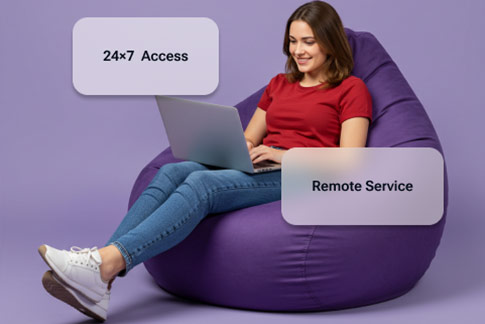
A video branch gives a UHNW client a direct, secure video channel to their relationship manager without either party needing to be in the same building, city, or time zone.
A client in Singapore who wants to review their portfolio at 9 PM local time connects directly with their RM in New York, who, by appointment, is available for that session. The session is encrypted end to end. The RM can share their screen, walk through portfolio allocations, model scenarios in real time, and document the entire conversation as part of the client’s permanent record.
For private banks with globally distributed client bases, this is transformative. It eliminates the “I’ll have to call you back” response that signals to a UHNW client that they are not the priority. It replaces quarterly reviews with the possibility of a meaningful conversation any time something important happens. And it creates a consistent, compliant record of every advisory interaction, which protects both the client and the bank.
Smart Routing That Connects the Right Expert Every Time
Not every question a UHNW client asks falls within their primary RM’s expertise. A question about offshore trust structuring requires a different specialist than a question about a private equity co-investment opportunity. A question about estate planning needs someone different from a question about FX hedging on a cross-border real estate purchase.
Custom routing and client journey design means that when a client connects through the video channel, they reach the right person for their specific need, not just a generic call center or a junior associate covering for their RM. The routing logic can prioritise the primary RM, escalate to a specialist, and maintain a full record of who spoke with the client, when, and about what.
For a UHNW client with a complex, multi-asset, multi-jurisdiction portfolio, this means every video interaction feels cohesive rather than fragmented. They are not explaining their situation from scratch to a different person every time.
Video KYC and Enhanced Due Diligence for New Accounts
Onboarding a new UHNW client is one of the highest-stakes moments in private banking. The client is making a judgment call about the bank at the same time the bank is running its compliance processes. A slow, document-heavy, branch-dependent onboarding process signals to the client that the experience ahead will be just as inconvenient.
With video KYC, a new client can be verified through a structured live video session wherever they are in the world. The bank officer conducts identity verification using government-issued documents, confirms the client’s beneficial ownership information, and documents the session with a full time-stamped recording. This satisfies the Customer Identification Program requirements under the Bank Secrecy Act, enforced by FinCEN, and creates the audit trail required for Enhanced Due Diligence on high-risk, high-value private banking relationships.
FinCEN’s 2025 rule changes represent the most far-reaching KYC rewrite since the original 2003 CIP rule, with beneficial ownership deadlines, risk-based codification, and digital identity verification now getting official regulatory airtime. Private banks that build video-based identity verification into their onboarding now are building compliance infrastructure that is already aligned with where regulation is heading.
For UHNW clients who travel constantly and may never be physically present in the same city as their bank’s headquarters, video KYC is not just convenient. It is often the only feasible way to complete onboarding without asking the client to rearrange their schedule around the bank’s operational constraints.
Credit and Collateral Verification for Complex Lending
UHNW clients frequently use their investment portfolios as collateral for significant credit facilities: margin loans, structured financing, real estate acquisition bridges, and bespoke lending arrangements. These products require human judgment and documented verification, not just algorithmic credit scoring.
Video-based credit verification allows the bank’s lending team to conduct a structured, recorded verification session with the client, review supporting documentation through a secure channel, ask clarifying questions about the nature of the assets and the purpose of the facility, and complete a compliance-ready record of the interaction. This is particularly important for private banking credit products that fall under Enhanced Due Diligence requirements, where standard automated verification is insufficient.
The speed advantage is significant. A credit discussion that would take two weeks through the traditional paper-and-branch cycle can be completed in a single afternoon video session, with the transcript and recording immediately available to the credit team for review.
Custom Workflows That Match the White-Glove Experience
The standard video call has no place in private banking. UHNW clients do not want to join a generic video link. They want a branded, seamless experience that feels like an extension of the bank’s premium service, not a pivot to consumer-grade software.
Video calling with custom workflows allows private banks to build the entire video experience around their brand, their processes, and their compliance requirements. Pre-call authentication. Branded waiting rooms. Automatic session recording with secure storage. Post-call documentation that feeds directly into the client’s CRM record. These are not add-ons. They are the features that separate a premium video banking experience from a generic video call.
For a private bank that has spent decades building a reputation for discretion and quality, the technology channel cannot feel like an afterthought. Every touchpoint, including and especially the video interface, has to reflect the same standard as every other part of the service.
The Compliance Picture: Why Video Creates a Better Audit Trail Than Physical Meetings
There is a compliance argument for video banking that private banks often overlook: a properly recorded and stored video advisory session creates a far more complete audit trail than a physical meeting.
When an RM meets a client at the client’s home or at a restaurant, the record of that conversation is whatever the RM writes in their notes afterward. That record is subjective, incomplete, and created after the fact.
A recorded video session is objective, complete, and created in real time. It captures exactly what was said, what was shown, and what was agreed. For higher-risk customers, including private banking relationships, institutions must apply Enhanced Due Diligence, which may include more frequent reviews, additional documentation, and senior management approval. A video record of each advisory interaction satisfies this requirement comprehensively, in a way that handwritten notes simply cannot.
FinCEN’s AML rule extending Bank Secrecy Act obligations to registered investment advisers is estimated to impact approximately 15,000 RIAs managing in excess of USD 120 trillion in assets. As regulatory scrutiny of private banking relationships continues to increase, the institutions that have built comprehensive, searchable records of every client interaction are going to be significantly better positioned than those relying on paper trails and memory.
What Private Banks Should Look for in a Video Banking Platform
End-to-end encryption and US data residency. All session data must be stored within the United States, accessible only to the bank, and protected against interception. For UHNW clients, discretion is non-negotiable.
Branded client experience. The video interface must reflect the bank’s identity, not the vendor’s. No generic links. No consumer-app aesthetic.
Seamless routing to the right specialist. The platform must support intelligent routing so that a client question about estate planning goes to an estate planner, not to whoever picks up the queue.
Full compliance documentation. Time-stamped session recordings, automatic session summaries, and integration with the bank’s CRM and compliance systems are essential, not optional.
Adaptive quality across geographies. A client in Singapore or Dubai may have a different bandwidth situation than one in New York. The platform must handle connection quality gracefully.
No app download required. Asking a UHNW client to install software before they can speak to their banker is a friction point that immediately signals that the technology was not designed with the client in mind.
The Relationship That Travels
Private banking has always been about the relationship. That has not changed. What has changed is that the relationship can no longer be limited by where the client happens to be standing.
The mission for private banks is clear: elevate the white-glove experience without losing the human touch. Secure video is the channel that makes this possible. It puts the RM in the room with the client, regardless of the room’s city, time zone, or continent.
The entrepreneur in Singapore who messaged his RM at 10 PM and did not get a response until morning was not asking for a chatbot. He was not asking for an automated portfolio alert. He was asking for the thing that private banking promises and too often fails to deliver at scale: a real person who knows his situation and is available when he needs them.
Secure video, built into the bank’s service model rather than bolted on as an afterthought, is what closes that gap.
Frequently Asked Questions
Is video-based client onboarding compliant with US banking regulations? Yes. FinCEN’s 2025 KYC framework explicitly recognises high-assurance digital identity verification meeting NIST Identity Assurance Level 2 or higher as valid for Customer Identification Program purposes under the Bank Secrecy Act. A structured video session with live officer participation, government document verification, and session recording meets the documentation requirements for both standard CIP and Enhanced Due Diligence for private banking relationships.
How does video banking meet Enhanced Due Diligence requirements for UHNW clients? Enhanced Due Diligence for high-risk clients, including private banking relationships, requires more frequent reviews, additional documentation, and a comprehensive audit trail. A recorded video session provides a real-time, objective, time-stamped record of every advisory interaction, which is significantly more complete and auditable than written notes from a physical meeting.
Can the video experience be fully branded to the bank’s identity? Yes. A properly implemented video banking platform supports fully branded client interfaces, including custom authentication flows, branded waiting rooms, and the bank’s visual identity throughout the session. The client experience should be indistinguishable from any other premium digital touchpoint the bank provides.
How does intelligent routing work in a private banking video context? Intelligent routing allows the bank to define logic that connects clients to the right person for their specific need. A client calling about an estate planning question is routed to the estate planning specialist. A question about an alternative investment opportunity is routed to the alternatives team. The primary RM remains the relationship anchor, but specialists are brought in seamlessly when the question requires deeper expertise.
What happens to the session recording after a video call? All session recordings are transferred immediately to the bank’s own secure storage environment. Under best practices and relevant US data protection frameworks, no session data should remain on the video platform vendor’s servers after transfer. The recording becomes part of the client’s permanent compliance record, accessible to authorised bank staff and auditors.
Can elderly UHNW clients who are less comfortable with technology use video banking? Yes, when the platform is designed correctly. A properly implemented video banking experience requires no app download. The client receives a secure link via text or email and connects through their browser with one click. The interface is clean, simple, and requires no technical knowledge beyond tapping a link. Bank staff can walk a less tech-comfortable client through the process on their first session, which typically takes under two minutes.
How does video banking support relationship managers with large, globally distributed books? By eliminating travel time and enabling scheduled video sessions across time zones, RMs can maintain meaningful, high-quality contact with significantly more clients per week than the physical meeting model allows. Pre-call preparation is supported by the client’s CRM record, and post-call documentation is captured automatically, freeing the RM to focus on the advisory conversation rather than administrative follow-up.