



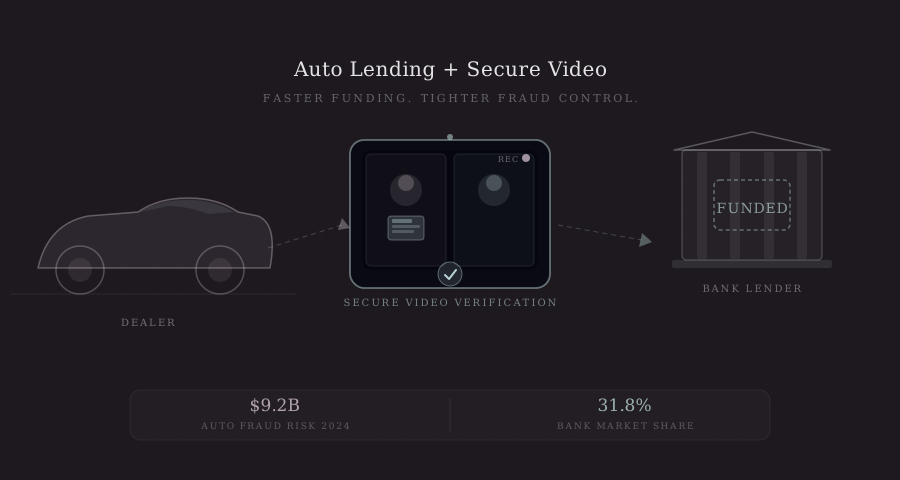
Auto lending in the US moves fast on the surface and slowly underneath.
A customer walks into a dealership, picks a vehicle, and expects to drive home the same day. The dealer submits the application to a bank or credit union. What happens next is, depending on the lender, anywhere from a crisp automated decision to a multi-day paper chase involving phone calls, faxed stips, and underwriters waiting on documents that may or may not be what they appear to be.
Banks now hold the highest market share in auto lending at 31.8%, according to Experian data compiled by LendingTree. That is a significant responsibility and a significant exposure. The volume of loans moving through dealer networks is enormous, and the infrastructure used to verify, underwrite, and fund many of those loans is still built around emails, fax machines, and scheduled calls between dealer finance managers and bank underwriting desks.
Speed is expected. Control is non-negotiable. Most lenders are struggling to deliver both at the same time. Secure video changes that.
The Real Friction in Dealer-to-Bank Loan Processing
To understand where video fits, you have to understand where the process actually breaks down.
The credit decision itself is often fast. Automated decisioning systems can return approvals or conditional approvals in minutes. The bottleneck is everything that comes after: stipulation fulfillment. A lender approves a loan subject to proof of income, proof of insurance, a copy of the title, a valid ID, and perhaps a reference letter. The dealer collects those documents, scans or photographs them, and submits them through whatever system the lender uses. The lender’s funding team reviews them.
That review is where fraud risk concentrates, where exceptions live, and where processing time compounds. Each document that comes through as a blurry scan, a potentially altered PDF, or an income statement with inconsistencies requires human judgment. That judgment historically required a phone call, often at a moment when neither party is immediately available or a return stip request that sends the whole loop around again.
Origination speed directly influences conversion, dealer loyalty, and competitive positioning. As borrowers and dealers expect same-day or near-instant decisions, lenders that rely on sequential reviews, manual intake, or delayed data movement risk higher abandonment rates, even when the credit policy is sound.
That last clause is the painful part. A lender can have perfectly sound credit policy and still lose dealer relationships simply because its funding process is slower and harder to work with than a competitor’s.
The Fraud Problem Is Getting Significantly Worse
Speed pressure exists alongside a fraud environment that is deteriorating sharply, and that combination is the central tension auto lenders need to resolve.
Auto lending fraud climbed 16.5% to $9.2 billion in risk exposure in 2024, with identity-related schemes such as synthetic identity fraud, true name identity theft, and credit washing now representing 45% of all auto lending fraud, a 41% jump over the previous year.
The fraud is not unsophisticated. Synthetic identity fraud hit 88 basis points in 2024, meaning roughly 1 out of every 114 applications involves a fake identity. Fraudsters are using AI-generated documents, deepfake-powered impersonation, and organized networks operating across multiple states and dealer relationships simultaneously.
The FTC’s Consumer Sentinel Network received 6.5 million consumer complaints in 2024, an all-time high, with 176,000 consumer-reported cases of identity theft involving loans and leases specifically.
The implication for auto lenders is direct: the document-centric, phone-based stip fulfillment process they have relied on for decades is no longer adequate as a fraud control. A scanned pay stub can be manipulated. A PDF can be altered. A voice on a phone call cannot be liveness-verified. The channel itself has become a vulnerability.
This is where video enters the picture, not as a customer experience improvement, but as a risk control.
What Secure Video Actually Does in the Auto Lending Workflow
Video banking in auto lending is not about making the loan process friendlier, though that is a byproduct. It is about adding a verified, recorded, human-in-the-loop checkpoint at exactly the moments where document fraud and identity fraud are most likely to occur.
Here is how that maps to the dealer-to-bank workflow practically.
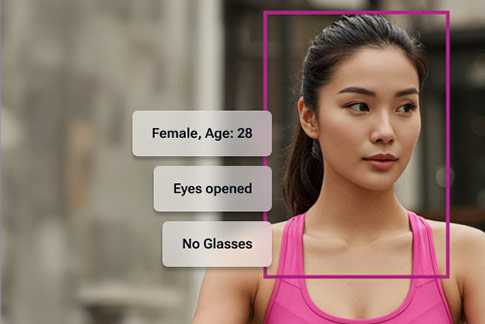
Live identity verification at stipulation. Rather than accepting a scan of a government-issued ID, a lender’s funding officer can open a secure video session with the borrower directly, verify the ID in real time with the document present, confirm liveness, and check that the person on screen matches the application. Video KYC replaces a passive document upload with an active, auditable verification. A deepfake cannot hand a real driver’s license to the camera and hold it up for inspection. A synthetic identity cannot pass a live face check against the application photo.
Income and employment verification with context. A borrower who has submitted a pay stub that triggers an exception flag does not need to wait for a phone tag loop. A funding officer can open a video branch session, walk through the document together, ask the borrower to confirm details verbally on camera, and make a documented decision in minutes. The session is recorded. The decision has an audit trail. Exceptions that would previously have taken two days to resolve are handled in a single interaction.
Dealer-side verification for high-risk deals. Some fraud originates at the dealer level, not necessarily the dealership itself, but through individuals in the finance office submitting altered applications. A lender that can require a live video session for deals above a certain risk score, or for new dealer relationships, adds a layer of verification that a document submission process simply cannot replicate. The video credit verification and PD session format gives lenders a structured protocol for exactly this kind of interaction.
Underwriting Control Does Not Have to Mean Underwriting Slowness
The instinct at many lenders when fraud risk rises is to add more manual review steps. That instinct is correct in principle and destructive in practice. More sequential manual steps mean longer funding times, and longer funding times mean dealer dissatisfaction, and dealer dissatisfaction means the loan book walks across the street to a competitor.
The answer is not fewer controls. It is smarter ones.
Video banking allows lenders to concentrate human review where it actually matters, specifically on exceptions, on high-risk applications, and on new relationships, while letting automation handle the clean, straightforward deals without delay. The underwriter’s time goes to the 20% of applications that genuinely need judgment. The other 80% fund quickly.
What makes this work operationally is routing. Not every incoming stip package has the same risk profile. A clean application from an established dealer relationship with a prime borrower and strong income documentation is a different animal from a first-time dealer submission with a borderline credit score and income documentation that did not match the application’s employer field. Customer journey and routing tools can prioritize incoming applications and stip packages at the point of entry, directing high-risk items to live video review and clearing low-risk items through automated validation.
The result is a faster average funding time and a stronger fraud control posture simultaneously, not a tradeoff between the two.
The Dealer Relationship Dimension
It is worth saying clearly: the dealer is the customer in indirect auto lending. A bank that makes the stip fulfillment process painful for a dealer’s finance manager is a bank that loses allocations. Dealers route deals to lenders who fund cleanly and quickly. A bank that is slow but thorough loses volume to a bank that is fast but maybe looser. Neither is a good outcome.
Video changes the value proposition for dealers too.
A dealer finance manager who can open a video session with a lender’s funding officer in real time, to walk through a document exception, to clarify an income discrepancy, to get a quick judgment call on a borderline deal has a fundamentally better working experience than one who submits documents into a queue and waits. That experience translates directly into deal allocation decisions.
Lenders who deploy video as a dealer relationship tool, not just a borrower verification tool, are building operational stickiness that pricing alone cannot create.
Compliance, Audit Trails, and the Regulatory Dimension
Auto lending compliance is multi-layered. The Equal Credit Opportunity Act, the Truth in Lending Act, state-specific rate cap regulations, and increasingly assertive CFPB enforcement all create a documentation requirement that manual processes struggle to satisfy consistently.
For lenders operating across multiple states or through indirect channels, the consistent application of jurisdiction-specific rules, including state rate caps, cooling-off periods, and documentation requirements, is increasingly enforced by regulatory examiners looking for traceability and execution evidence, not just policy statements.
Video sessions, when properly implemented, generate exactly that evidence. Every borrower verification is timestamped, recorded, and associated with the loan file. Every document review on screen is logged. Every exception decision has a human face and a recorded explanation attached to it. That audit trail is not just a compliance asset, it is a defense asset when a loan goes bad and questions arise about what was verified and when.
Dashboards and reporting that surface session data, exception rates, and verification outcomes by dealer, by loan officer, and by application risk tier give compliance and operations leadership the visibility to catch problems early, before they become portfolio problems or examination findings.
The Speed Math, Done Honestly
Let us be direct about what video banking does and does not do to processing speed.
It does not make automated decisions faster. Those are already fast.
What it does is collapse the time between a conditional approval and a funded loan for the deals that require human intervention. A stip that previously required a fax, a wait, a phone call, a rework, and another submission cycle can be resolved in a single 15-minute video session. The borrower does not need to drive back to the dealership. The dealer’s finance manager does not spend two hours on hold. The lender’s funding officer reviews everything needed in one interaction, makes a decision, and moves to the next file.
Lenders that rely on sequential reviews, manual intake, or delayed data movement risk higher abandonment rates even when credit policy is sound. The abandonment that matters most is not the borrower leaving the dealership. It is the funded loan that never happens because a dealer routed the next deal to a lender who made the process easier.
What Good Implementation Looks Like
Deploying video in auto lending processing is not complicated, but it does require intentional design. A few things that determine whether it works:
The entry point for the borrower has to be frictionless. One link, one tap, works on any phone, does not require an app download. Borrowers who are sitting in a dealership or at home waiting to hear on a loan approval do not have patience for a technical setup process.
The session has to be recorded and the recording has to land directly in the loan file. A video verification that exists in a separate system from the LOS is a liability, not an asset. Integration matters.
The routing logic has to be right. Video review should not be the default for every application. It should be triggered by risk signals, score cutoffs, income discrepancy flags, new dealer relationships, document quality concerns. Deploying video indiscriminately adds cost and time. Deploying it surgically adds control without adding friction for clean deals.
Lenders that get these three things right find that video becomes a competitive differentiator with dealers, a meaningful fraud control layer, and an audit documentation improvement, all at once.
FAQs: Video Banking in Auto Loan Processing
Q: Does borrower-facing video verification work when the customer is at the dealership?
Yes, and it often works better than the alternative. A borrower who is sitting in the F&I office can complete a video identity verification in under five minutes on their phone. The dealer’s finance manager does not need to be involved. The lender gets a verified identity and a recorded session. The borrower gets a faster answer. The dealership gets a cleaner deal.
Q: What happens when a borrower refuses to do a video verification?
That itself is a risk signal. Lenders can set policy on which loan tiers or risk segments require video verification as a condition of funding. A borrower who declines in a segment where it is required either provides an alternative verification path specified by the lender or does not proceed. The refusal data is also useful, patterns of verification refusal concentrated at specific dealers or in specific application segments are worth examining.
Q: How does video verification hold up under Equal Credit Opportunity Act (ECOA) and fair lending scrutiny?
Consistently applied, video verification is a fairer control than inconsistent manual review, because it creates an equivalent documented process across all applications where it is triggered. The trigger rules matter: lenders should ensure that the risk criteria that route applications to video review are credit-risk-based and applied uniformly, not demographic proxies. Documented, consistent application is the standard regulators look for.
Q: Can video sessions integrate with existing Loan Origination Systems (LOS)?
This depends on the Loan Origination Systems (LOS) and the video platform, but most enterprise video banking solutions are built with API connectivity in mind. The practical requirement is that session recordings and verification outcomes land in the loan file automatically, without a manual transfer step. Any platform that requires a funding officer to manually upload a recording to the LOS is creating a workflow that will not be followed consistently.
Q: Is the fraud resistance of live video durable, given that deepfake technology is advancing?
Live video with a physical document present is meaningfully more resistant than document uploads or voice-only verification today. Deepfake real-time video spoofing at the quality needed to fool a trained human reviewer remains technically demanding and operationally complex for fraudsters. The right response is liveness detection tools layered with human review, not reliance on either alone. The combination is substantially stronger than what most lenders currently deploy.