



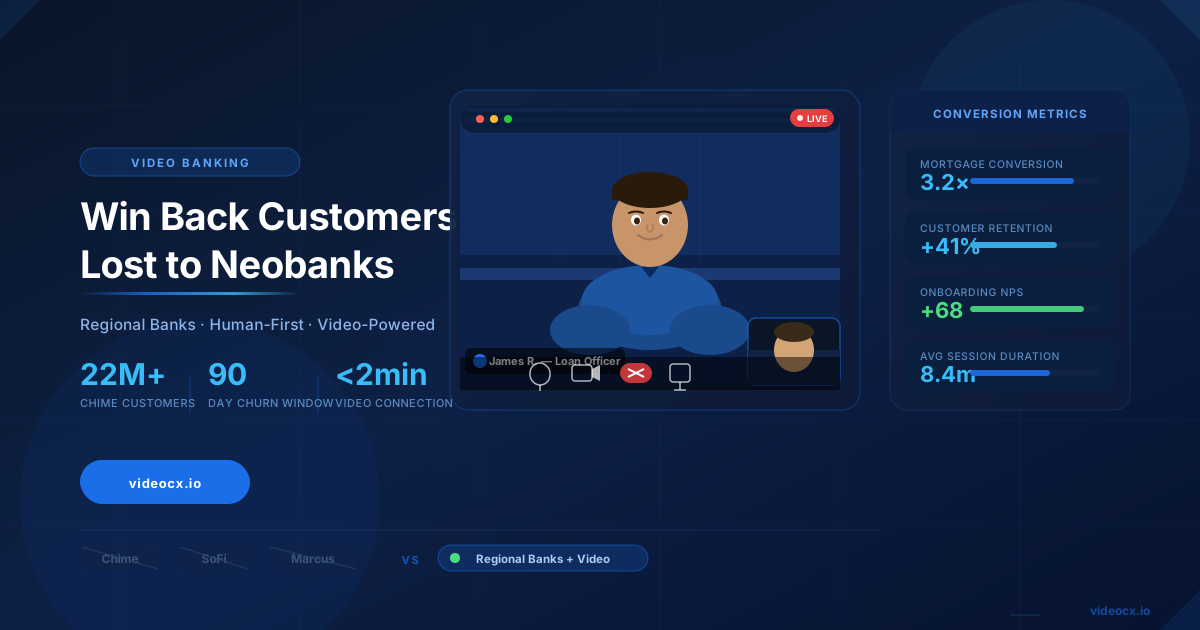
Chime added roughly 22 million customers without a single branch. SoFi built a mortgage business from a phone app. Marcus by Goldman Sachs offered high-yield savings to people who had never stepped foot in a Goldman office.
Regional banks watched this happen and largely responded the same way: build a better mobile app, cut some fees, add Zelle. That response is understandable. It is also insufficient.
The neobank advantage was never really about the app. It was about removing the friction between a customer and the thing they wanted. No paperwork. No branch hours. No waiting. If regional banks want those customers back, they need to compete on the same axis, which means removing friction too. But they have something neobanks cannot easily buy: the ability to put a real, knowledgeable human being on screen in under two minutes.
That is the strategic opening. And most regional banks are not using it.
Why Neobanks Won the First Round
It is worth being honest about what happened.
Neobanks did not win on price alone. Plenty of regional banks have competitive rates. They won on experience. Opening a Chime account takes four minutes on a phone. Getting a SoFi personal loan involves a digital flow that feels like filling out a form on Amazon, not applying for credit at a financial institution.
Meanwhile, the traditional experience at many regional banks, even good ones, required visiting a branch during business hours, sitting across from someone with a stack of forms, and waiting several days for a decision that a neobank would return in seconds.
The customers who left were not disloyal. They were impatient. And they were right to be.
But here is what happened next. A significant portion of those same customers hit a wall. They needed to dispute a charge and got a chatbot. They wanted to talk through refinancing options and found a FAQ page. They had a fraud concern at 11pm and reached an automated message. Neobanks optimized the entry experience and underinvested in the relationship experience.
That gap is where regional banks can rebuild.
The Relationship Advantage Regional Banks Actually Have
Regional banks have loan officers who know the local market. Relationship managers who understand a small business owner’s seasonal cash flow patterns. Trust built over decades with families across a community.
The problem has never been the relationship. It has been the delivery mechanism. Relationships that require a branch visit or a phone call during business hours are relationships constrained by geography and scheduling, not by quality.
Video banking removes those constraints without removing the human.
A video branch lets a regional bank’s loan officer sit face-to-face with a customer who is in another county, or working from home, or unwilling to take two hours out of a workday to come in. The conversation is the same. The expertise is the same. The trust that gets built is real. The only thing that changed is the customer no longer had to rearrange their life to access it.
That is not a minor improvement. For the customer who left for Chime because the in-branch experience was too inconvenient, it is potentially the reason to come back.
Where Video Wins Against Neobanks Specifically
Neobanks are very good at standardized, high-volume financial products. Checking accounts. Savings accounts. Basic personal loans. They are not set up to handle complexity.
Complex needs are exactly where regional banks have always been strongest, and where video banking gives them a decisive edge.
Mortgage and home equity conversations. A first-time homebuyer with questions about down payment assistance programs, local market conditions, and how to think about a 15-year versus 30-year term is not going to get satisfying answers from a neobank chatbot. A regional bank loan officer on a video call can walk through the numbers, share their screen, and answer follow-up questions in real time. That conversation closes deals. A form does not.
Small business banking. A business owner evaluating an SBA loan, a line of credit, or a merchant cash advance needs a banker who understands their industry and their financials. Video makes that relationship accessible without requiring the business owner to leave their shop.
Investment and wealth conversations. Once a customer has enough assets to think about them seriously, the neobank experience starts to feel thin. A regional bank advisor on video can do what no robo-advisor can: ask questions, listen, and respond to the specific situation in front of them.
Hardship and restructuring. Customers who hit financial difficulty need to talk to a person. They are not going to resolve a loan modification through an app. The regional bank that can get a sympathetic, capable officer on screen within minutes of a customer reaching out has a meaningful chance of retaining that customer and their future business.
The Onboarding Window Is Where Banks Lose People
Most customer attrition happens in the first 90 days. A customer opens an account, has a confusing experience, cannot find help fast enough, and quietly moves their direct deposit somewhere else.
Neobanks solved this with obsessive digital onboarding flows. Regional banks can solve it differently: with a human touchpoint at exactly the right moment.
Video KYC allows identity verification to happen over a live video session, which removes one of the most friction-heavy steps in account opening. No branch visit to show an ID. No mailing in documents. A live officer verifies the customer’s identity in minutes, and the customer gets to start that relationship with a real interaction rather than a form submission.
That early human contact predicts long-term retention. A customer who has spoken to a person at their bank in the first week is far more likely to think of that bank as their primary financial relationship six months later.
Routing the Right Customer to the Right Conversation
One mistake banks make when deploying video is treating it like a video call center. Every customer goes into a queue. Every officer handles whatever comes next.
That approach wastes the expertise regional banks have built. A small business customer routed to a retail banking officer gets a subpar experience. A mortgage prospect routed to a deposit specialist loses interest before the call ends.
Customer journey and routing tools ensure that the customer’s intent, whether identified from their digital behavior, their stated reason for reaching out, or their account profile, determines who they speak to and how fast they get there. The right officer is on screen before the customer has had time to reconsider. That is how video banking competes with neobank speed without sacrificing regional bank depth.
Turning Video Data Into a Retention Strategy
One of the structural advantages neobanks have is data fluency. They know which features customers use, which flows cause dropout, and which segments are at risk of churning. They optimize continuously.
Regional banks have historically been slower on this front, not because the data does not exist, but because it has not been surfaced usefully.
Dashboards and reporting built around video banking sessions give regional banks the same kind of operational visibility. Which product conversations lead to completed applications? Which customer segments are using video most? Where are drop-offs happening? Which officers have the highest session-to-product conversion rates?
That data is not just operational. It is strategic. It tells a regional bank exactly where its human advantage is delivering results and where it needs to invest more.
Building Trust That Compounds Over Time
There is something neobanks cannot manufacture quickly: the compounding trust that comes from a relationship with someone who remembers your name, your situation, and your history.
A regional bank officer who handled a customer’s first car loan and then appeared on video three years later to discuss a home equity line is not just providing a service. They are providing continuity. That is a relationship asset that no fintech can replicate from a standing start.
Video as the trust layer in digital banking journeys is what turns a transactional interaction into a retained customer. It is the mechanism by which regional banks convert their existing goodwill into long-term loyalty, rather than watching that goodwill slowly erode because the delivery channel was too inconvenient to use.
The Neobank Customer Profile That Is Ready to Come Back
Not every customer who moved to Chime is a lost cause. The profile of the returnable customer is fairly consistent.
They are now in a life stage with more financial complexity. They own property or are thinking about it. They run a business or are planning to. They have children and are thinking about college savings. They have enough assets to want advice, not just a dashboard.
They left a regional bank because the experience felt designed for the bank’s convenience, not theirs. They have been with a neobank long enough to know what that relationship’s ceiling is.
If a regional bank can reach them at that moment with a frictionless, face-to-face conversation about exactly the product they need, the competitive math changes. The video credit verification and PD process that makes complex product onboarding feel as easy as the original neobank signup is what closes that loop.
What Regional Banks Should Do Now
The window is real, but it is not permanent. As neobanks mature, some will invest in human service layers. The regional bank that establishes video banking as a core channel now builds the operational expertise and customer habits that are hard to dislodge later.
The customers who left are not gone. They are at a life stage where the neobank’s ceiling is becoming visible. A regional bank that can show up for that moment, on screen, in the customer’s home, on their schedule, with an officer who knows their products and their community, is offering something worth coming back for.
The branch was never the point. The relationship was. Video is how you deliver the relationship at scale.
FAQs: Regional Banks and Video Banking
Q: Won’t customers who left for neobanks just prefer to stay fully digital? Do they actually want video calls?
Most customers do not want video calls for routine transactions. They want them for decisions that matter. Research consistently shows that customers prefer human interaction for mortgage applications, investment decisions, loan structuring, and anything involving financial difficulty. The neobank experience taught people that digital is fine for simple things. It also showed them the limits. Video gives regional banks the ability to be genuinely digital for routine needs and genuinely human for complex ones.
Q: What stops a neobank from just adding video banking too?
Nothing, and some are trying. But the human side of video banking is not a feature. It is a workforce. Neobanks built organizations designed to minimize human contact at scale. Building a nationally distributed team of loan officers, wealth advisors, and relationship managers who can have substantive conversations is a fundamentally different business than building software. Regional banks already have those people. The question is whether they are making them accessible enough.
Q: Is video banking secure enough for banking conversations?
Yes, when built correctly. Enterprise video banking platforms are built with end-to-end encryption, session recording for compliance, secure document sharing, and audit trails that meet banking regulatory requirements. This is meaningfully more secure than a WhatsApp call, which some institutions have experimented with.
Q: How long does it take to implement video banking for a regional bank?
Implementation timelines vary by existing technology infrastructure, but most regional banks can deploy a core video banking capability within a few months. The larger investment is operational: training staff, defining routing logic, and integrating video sessions into existing CRM and loan origination workflows. Banks that approach it as a channel transformation rather than a technology installation tend to see faster adoption.
Q: Does video banking work for older customers who may not be comfortable with technology?
Better than you might expect. The video call is a familiar interface at this point, accelerated significantly by the pandemic. The more relevant design question is how easy the entry point is. A customer who can join a video session with one tap from a text message link needs no technical sophistication. Designing for simplicity of access is the key variable, not the video format itself.
Q: What products convert best through video banking?
Mortgage and home equity products, personal loans, small business credit lines, and investment account openings consistently show strong conversion through video-assisted channels. Account opening with live identity verification also performs well. Routine transactions like transfers and balance checks are better served by self-service digital channels. Video’s strongest returns come when it is positioned for conversations where complexity or trust is the deciding factor.