



High-net-worth individuals are the most valuable clients a bank has. They are also the most demanding, and for good reason.
An HNI client is not just depositing money. They are trusting a relationship manager with their estate planning, their business cash flows, their family’s financial future, and sometimes their entire net worth. That kind of trust takes years to build. It also takes exactly one bad experience to break.
The challenge banks face today is simple but serious: their best clients are no longer in one city. They travel. They relocate. They have investment interests in multiple countries. And yet the quality of the service they receive should feel the same whether they are in Mumbai, Dubai, or Melbourne.
Video banking is not a new idea. But most banks are still using it wrong. This guide explains what it actually takes to use video to serve HNI clients well, across geographies, without making them feel like they are being passed to a self-service portal.
Why Geography Is the Biggest Unsolved Problem in HNI Banking
Relationship banking, by its original design, was local. A senior relationship manager would meet a client at a branch, over lunch, or at the client’s office. Frequency and physical presence were the foundation of trust.
That model breaks the moment an HNI client moves cities or spends six months a year overseas.
Banks have tried to solve this in a few ways. They reassign the account to a local RM. The client has to rebuild trust from scratch. Or they allow the original RM to manage the account remotely using phone calls and email. The quality degrades. Decisions slow down. The client starts exploring other options.
Neither outcome is acceptable when you are talking about a client with a portfolio worth several crores or more.
The real solution is not to move the RM closer to the client. It is to make distance irrelevant while keeping the relationship feeling personal and high-touch.
What HNI Clients Actually Expect From Digital Interactions
Before designing a video banking strategy for HNI clients, banks need to understand what this segment actually values.
HNI clients are not impressed by technology for its own sake. They want speed, but not at the cost of accuracy. They want convenience, but not at the cost of feeling like a number in a queue. They want digital access, but they also want to speak to someone who knows their name, their portfolio history, and their preferences.
Research from wealth management firms consistently shows that HNI clients rate relationship quality as the top reason they stay with a bank. Not product range. Not fees. The relationship.
Any video solution that strips out the relational element and replaces it with a standardised, scripted interaction will fail with this segment. The video channel has to feel like an upgrade on a phone call, not a downgrade from an in-person meeting.
The Right Architecture for High-Touch Video Banking
Getting video banking right for HNI clients requires thinking about three things separately: access, experience, and compliance.
Access means the client can reach their RM or a specialist whenever they need to, without being put in a queue, transferred three times, or asked to visit a branch.
Experience means the interaction feels premium. The RM can see documents, share screens, co-review portfolios, and have a real conversation. Not a choppy call where the RM is looking at a different screen and typing while the client is talking.
Compliance means every interaction is verifiable, documented, and legally defensible. For banks operating across India and Australia, this is non-negotiable.
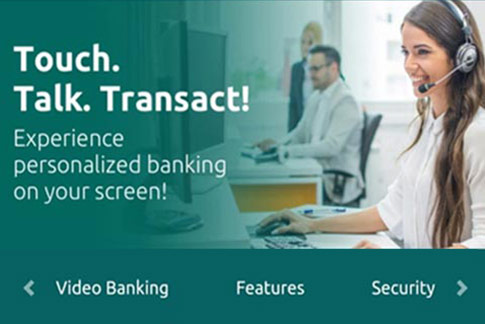
These three elements are what a well-designed video branch and video banking infrastructure is built to deliver. The idea is not just to put a camera on a call centre agent. It is to replicate the full branch banking experience, with all of its depth, through a secure and premium video channel.
Onboarding HNI Clients Remotely Without Reducing Rigour
One of the most friction-heavy moments in HNI banking is onboarding. HNI clients have complex financial profiles. They may have multiple income sources, business interests, foreign assets, or inherited wealth. Onboarding them properly requires document collection, identity verification, risk profiling, and regulatory compliance checks.
In a traditional model, this requires the client to visit a branch or have a representative visit them. For someone who is travelling or based in another city, this is genuinely inconvenient and often causes delay.
Video-based KYC has changed this significantly. A well-run video KYC process allows a bank to verify identity, collect consent, conduct the onboarding interview, and fulfil regulatory obligations in a single live video session. The client does not need to go anywhere. The bank does not need to send anyone.
For HNI clients specifically, this matters because speed at onboarding sets the tone for the entire relationship. If the first impression is that the bank has made this easy and professional, the client starts the relationship with confidence. If it is slow and cumbersome, that impression persists.
Credit and Lending: Where Video Builds Confidence
HNI clients often have large, complex, and time-sensitive credit requirements. A business owner may need a working capital facility structured within days. A real estate investor may be moving quickly on a deal. In these situations, delays in the credit process are not just inconvenient. They can be financially costly.
The credit verification process has traditionally required face-to-face meetings, physical document submission, and in-person discussions about financial history and purpose.
Video-based credit verification allows banks to conduct these conversations and verifications remotely, with the same rigour as an in-person process. An RM or credit officer can conduct a structured video conversation with the client, review documents in real time, and record the session for compliance purposes.
For HNI clients who are geographically mobile, this removes one of the biggest process bottlenecks in relationship banking. The bank gets what it needs. The client gets a faster outcome. And the interaction still feels like a proper conversation, not a form submission.
The Co-Browsing Difference: What Separates Good Video Banking from Great
Most banks think of video banking as a call with a camera. That is where they stop. But the HNI use case demands more.
When a relationship manager is reviewing a portfolio with a client, they need to be able to walk the client through the numbers together. When a wealth specialist is explaining a structured product, they need to be able to show the client the term sheet and talk through it line by line. When a client has a question about a transaction, the RM needs to be able to see what the client is looking at on their screen.
This is where co-browsing on a video call becomes a genuine differentiator. Co-browsing allows the RM and the client to look at the same screen simultaneously, in real time, during the video call. No sharing logins. No “can you see what I’m seeing?” confusion. The RM can guide the client through a portfolio dashboard, an application form, or a product brochure as if they are sitting side by side.
For HNI clients who value precision and clarity, this capability transforms a video call from a conversation about documents into a true advisory session. The RM is no longer describing something the client cannot see. They are working through it together.
This is the closest thing to an in-person meeting that digital banking can currently offer.
Training Relationship Managers for Video-First HNI Service
Technology alone does not solve the relationship quality problem. The way relationship managers behave on video calls matters enormously.
Banks that are serious about HNI video banking invest in specific training for video-based client interactions. This includes how to structure a video call so it feels purposeful rather than rushed, how to maintain eye contact and build rapport through a screen, how to handle sensitive topics like estate planning or restructuring with the appropriate care, and how to use co-browsing and document sharing without the interaction feeling clunky or technical.
An RM who is awkward on video will make a premium client feel uncomfortable. An RM who is confident and well-prepared will make the client feel that the bank has invested in serving them well, even from a distance.
What a Mature HNI Video Banking Programme Looks Like
Banks that have built this capability well tend to share a few common characteristics.
They have dedicated relationship managers who are available over video on scheduled and ad hoc basis, not call centre agents who read from scripts. They have invested in the underlying infrastructure so that call quality, security, and compliance are never in question. They have trained their teams to treat video as the primary relationship channel, not a fallback when an in-person meeting is not possible. And they measure the quality of video interactions the same way they would measure the quality of a branch visit.
The result is a client experience that is genuinely geography-agnostic. An HNI client in Bengaluru and an HNI client in Sydney receive the same quality of service from the same RM, on the same platform, with the same compliance standards applied.
The Bottom Line
HNI clients do not need their bank to be local. They need their bank to be reliable, personal, and consistently excellent.
Video banking, when it is built correctly, makes that possible. It is not about replacing the relationship. It is about making the relationship independent of geography.
Banks that invest in this capability now are not just solving a service delivery problem. They are building a retention advantage that will matter more and more as HNI clients become more mobile, more digitally confident, and less tolerant of service that does not meet their expectations.
Distance is no longer an excuse. The banks that recognise this earliest will be the ones their best clients stay with.