

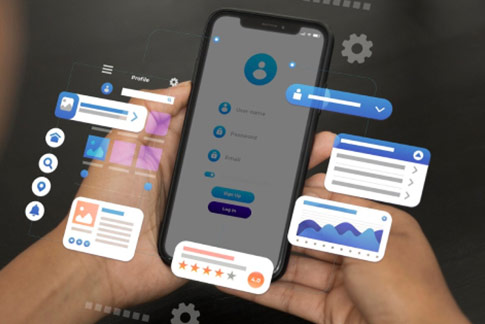




The American banking customer has spoken: 55% of bank customers now use mobile apps as their primary banking method, more than any other channel. But here’s the paradox: while customers embrace digital channels for simple transactions, they’re still hesitant about complex financial decisions without human support. For big financial decisions, people still want human expertise.
The challenge is clear: how do you meet customers in their preferred digital environment while providing the human guidance they need for advisory services, loan origination, and complex account management?
The answer is comprehensive video banking, but not the basic video chat tools most banks are using.
The Problem with Basic Video Banking
Most banks have dabbled in video banking by adding a Zoom SDK to their mobile app and assigning relationship managers to take calls. The results? Disappointing adoption, frustrated customers stuck in scheduling loops, and agents wasting time on calls they’re not equipped to handle.
Here’s the typical experience: A customer wants to discuss refinancing. They find a “Schedule a video call” button, pick a time slot three days out, download an app they’ll never use again, fumble with permissions, and finally connect with someone who may not even specialize in mortgages.
By comparison, that same customer can video chat with family in two taps. We’ve built video banking systems that are harder to use than consumer video apps, yet we expect customers to trust us with decisions involving hundreds of thousands of dollars.
What Comprehensive Video Banking Looks Like
Real video banking infrastructure supports the full spectrum of banking relationships. Here’s what that means:
Instant Connection, Zero Friction
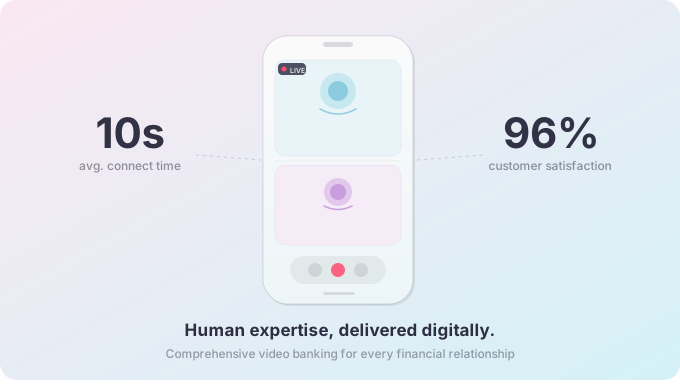
Modern platforms connect customers to available specialists in under 10 seconds through intelligent routing. A customer calling about a credit card issue gets routed directly to a credit card specialist who can see their account history before the video even connects. No downloads, no scheduling, no friction.
400+ Services, One Platform
Comprehensive video banking handles the entire banking relationship:
Account Management: Balance inquiries, statement requests, account upgrades, closures, nominee changes. All the routine services that drive 70% of branch traffic.
Transaction Services: Fund transfers, bill payments, deposit management. With screen sharing and co-browsing, agents guide customers through complex transactions in real time.
Loan Advisory and Origination: Customers connect with loan specialists who share screens to walk through scenarios and calculations. Document collection happens on the same call. The customer switches to their back camera, photographs documents, and the specialist captures, tags, and verifies them instantly.
Wealth and Investment Advisory: Portfolio reviews and financial planning that once required branch appointments now happen over video with full document sharing and e-signing capabilities. This trend is accelerating as customers become more comfortable with remote advisory services.
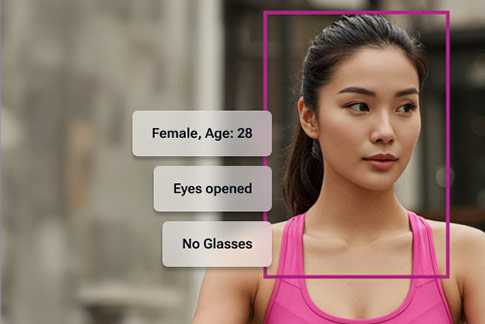
Credit Underwriting: V-CIP enables remote identity verification with face matching, liveness detection, and document authentication. Credit verification can be completed in a single session.
Pre-Built Workflows
This is where most video banking initiatives fail. Banks either build everything from scratch (burning months and hundreds of thousands of dollars) or buy a generic video SDK and realize they still need to build all the banking-specific workflows themselves.
Purpose-built video banking platform come with pre-configured workflows for different product journeys. Opening a savings account versus a corporate current account requires different data collection and compliance checks. Personal loan advisory versus mortgage advisory involves different calculators and risk assessments. These workflows are already configured, tested, and compliance-ready, reducing time to market from months to weeks.
Smart Routing
When a customer initiates a video call, the platform should already know what product they’re interested in (based on their navigation path), their relationship history, which specialists are available and qualified to help, and current queue depth.
Smart routing ensures mortgage questions go to mortgage specialists, wealth management inquiries reach investment advisors, and Spanish-speaking customers connect with bilingual agents. The result? Higher first-call resolution, shorter handle times, and dramatically better customer satisfaction.
Continuity Through Connection Failures
Here’s a scenario that kills adoption: A customer is 20 minutes into a mortgage application video call. They’ve shared financial information and uploaded documents. Then their Wi-Fi hiccups, and the call drops.
In a typical setup, that’s a disaster. The session is lost, the customer has to reschedule, and they must re-explain everything to a potentially different agent.
In a properly architected platform, parallel chat connection maintains the session even when video drops. Both customer and agent can rejoin the same session, with all shared documents and conversation history intact. Some platforms report this feature alone reduces drop-offs by over 55%.
The Business Case
The economics extend far beyond cost savings:
Branch Cost Avoidance: The average branch visit for a complex transaction costs the bank $30 to $50 in overhead. A video banking interaction costs a fraction of that while providing equivalent or better service.
Extended Coverage: Video banking specialists can serve customers across state lines and time zones. A bank doesn’t need mortgage specialists in every branch, just in a centralized hub serving customers nationwide.
Cross-Sell Effectiveness: When a customer is already on a video call for one service, the platform can surface cross-sell opportunities. One major bank reports 30% new product acquisition from customers already on video calls, without any additional marketing spend.
Faster Time to Market: With pre-built workflows, launching video banking support for a new product takes weeks instead of months.
Real Metrics from Real Banks
The difference between dabbling and deploying comprehensive video banking shows up in the metrics:
Connection Speed: Under 10 seconds from call initiation to agent connection (versus 3 to 5 days for scheduled appointments)
First-Call Resolution: 80%+ for complex transactions when agents have the right tools (versus 40% to 50% with basic video chat)
Customer Satisfaction: 96% of customers rate their mobile and online banking experience as excellent, very good, or good when video banking is properly implemented
Agent Productivity: With intelligent routing and pre-populated customer context, agents handle 40% more interactions per day while maintaining higher quality
Drop-Off Reduction: Parallel chat and session persistence reduce mid-journey abandonment by more than 50%
Building vs. Buying: The Hidden Costs
Many banks consider building video banking in-house. The calculus rarely works out. Building custom workflows for even 10 to 15 banking products typically requires 12 to 18 months and $500K+ in development costs. Video technology evolves rapidly, requiring dedicated engineering resources indefinitely. Banks that build in-house typically release new features quarterly at best, while purpose-built platforms release every 45 days.
What Customers Actually Want
Research shows customers don’t want to choose between digital convenience and human expertise. 77% of consumers prefer to manage their bank accounts through a mobile app or computer, yet they still value human interaction for complex decisions.
Banks offering 24/7 live chat support achieved higher satisfaction compared to those without it. The gap isn’t about the channel. It’s about availability and expertise.
Customers want instant access when they need help, the right expert for their specific question, context continuity so they don’t repeat themselves, and multi-modal support to handle complexity. Video banking, done right, delivers all of this.
The Path Forward
The banks winning the digital banking race aren’t the ones with the flashiest apps. They’re the ones that recognized a fundamental truth: digital transformation doesn’t mean eliminating human interaction. It means making human interaction available in digital contexts.
Comprehensive video banking is that bridge. It lets customers bank on their phones, on their schedules, from anywhere, while still getting expert human advice when they need it.
For banks evaluating their video banking strategy, the key questions are:
- Can our platform support the full range of banking services, or just basic inquiries?
- Do customers connect instantly, or do they have to schedule and wait?
- Can we handle complex transactions end to end on video, or do we force customers to visit a branch?
- Are our workflows built for banking, or are we retrofitting generic video tools?
- Can we launch support for new products in weeks, or does it take months?
The answers will determine whether video banking becomes a transformative competitive advantage or just another underutilized digital feature.
The opportunity is massive. 72% of U.S. adults use mobile banking apps in 2025, up from 65% in 2022 and 52% in 2019., representing the vast majority of bank customers. The banks that can combine that digital preference with human expertise will capture not just transactions, but relationships.
And in banking, relationships are everything.